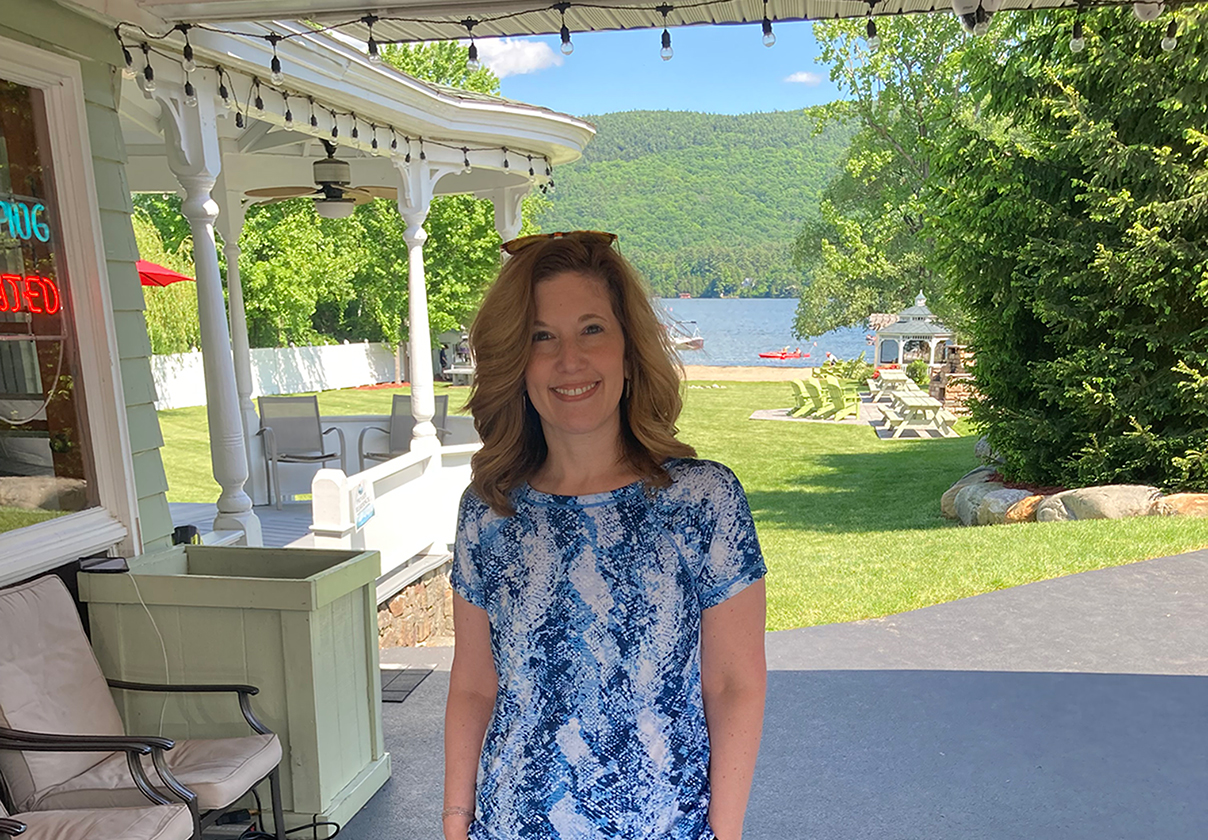
“I find that the DCISionRT test has significantly changed how we approach radiation therapy recommendations. I’ve been ordering the DCISionRT test on the majority of my patients over the last couple of years.”
Like many physicians, Dr. Alpert’s experience with a cancer diagnosis and treatment of a family member helped shape her ultimate career choice. “I have always had a strong affinity for biologic sciences and physics. That combination led me to Rensselaer Polytechnic Institute and proved to be a solid foundation for my career. While I was in medical school I had two family members who were diagnosed with advanced cancers, and I was able to see how important their relationship was with their oncologist. At that point, I decided that I wanted to combine the science to help patients live longer with the strong physician rapport to support the patient and their family members. Today, I am a radiation oncologist at Hematology-Oncology Associates of CNY, and I manage our Breast Care Partners Program.”
Evolution of Radiation Oncology
“I have witnessed significant changes in radiation oncology that benefit patients’ quality of life and outcomes. Treatments are becoming specialized by cancer sub type with more prognostic tools that guide treatment decisions. The difference in the treatments from just 10 – 15 years ago are profound and patients do much better. From a radiation standpoint, it used to be that radiation courses were very lengthy, lasting 6 – 7 weeks, which was highly disruptive for the patient. Today, radiation regimens have become compressed and we more commonly hypo fractionate or shorten the regimen to 1 – 2 or at most 3 weeks. That allows for patients to have a better experience with radiation and with better outcomes than even a decade ago.”
Radiation and Ductal Carcinoma in Situ
“Due to the advancements in medicine, my philosophy for treating ductal carcinoma in situ (DCIS) patients has changed over the last 20 years. When I started, we used to essentially treat patients that were young or had high grade disease. And now I look at things differently. The initial tools that we used, including nomograms, don’t have much bearing on prognosis. And so, we must look to tools that predict the risk of recurrence and enable a more informed discussion with the patient in terms of what treatment is recommended beyond surgery. I find that the DCISionRT test has been very helpful and has significantly changed how we approach radiation therapy recommendations. I’ve been ordering the DCISionRT test on the majority of my patients over the last couple of years.”
“DCISionRT lets the patient know ‘quantitatively’ how they will benefit from radiation. I think that patients appreciate having the numbers. It helps them have confidence that this is a worthwhile treatment. Conversely for patients that won’t benefit from radiation, they can feel confident that they’ll do well without radiation.”
DCISionRT and Multidisciplinary Teams
“I have three additional radiation oncology colleagues and they’ve been very receptive to DCISionRT. Over time we have all seen cases that we initially didn’t anticipate would benefit from radiation, yet their DCISionRT score is elevated, indicating they will derive substantial benefit. Conversely, we see high grade DCIS cases based on traditional clinicopathologic factors where the DCISionRT recurrence score is low. So, we’ve learned that the test gives you insight that you don’t see from the traditional clinical and pathologic variables.”
“In addition, within the community, there’s a collaboration between all of the surgeons, radiation oncologists, medical oncologists, and pathologists, where we meet weekly to discuss cases. We are seeing a growing appreciation among the surgeons for the test as the data is resulting in changes in treatment management.”
Advice for colleagues
“My advice for colleagues is to embrace genomic tests, whether it’s for surgical planning, medical oncology, or radiation oncology. They have large roles to play in making sure that patients get the treatment that’s going to best benefit them. I think that the time is definitely here to make use of these tests.”
Off Hours
“When I’m not at work, I am busy with my family. My eldest daughter is a freshman in college, and we visit when we can. My youngest daughter is an active high school junior who is involved in musicals and singing, so that is a lot of concerts and events. I also carve out time for myself. I’ve been doing yoga recently and playing the piano.