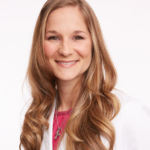
Dr. Lindsay Keith decided in high school that she wanted to pursue a career in medicine. By her third year in general surgery residency, she found her niche working with cancer patients and ultimately pursued a breast surgical oncology fellowship. Today, nearly 95% of her procedures are breast surgeries. “I am fortunate to be the only fellowship trained breast oncology surgeon at Saint Thomas Medical Partners in Murfreesboro, Tennessee.” Murfreesboro, one of the fastest growing cities in Tennessee, is a great place to start a practice and raise a family (more on that later).
Breast cancer patients are often cared for by a team of healthcare professionals, each with their own expertise, known as the multidisciplinary team. “My fellowship enabled me to more effectively communicate and partner with the entire breast cancer multidisciplinary team. I had the luxury of sitting with the pathologist and looking at slides, reviewing and discussing radiation cases with the radiation oncologist, sitting with the medical oncologist and reviewing the broad spectrum of therapies that they have available for the different stages of cancer, and working with a genetic counselor and hearing what they have to say to patients. This was an invaluable exposure to the entire spectrum of breast cancer care.”
“During my fellowship, I had two different attending surgeons. One was employed by the hospital and the other was a private solo practice. The older surgeon prescribed lumpectomy and whole breast radiation for every ductal carcinoma in situ (DCIS) patient, regardless. No partial breast radiation, no DCISionRT®, none of that. It was definitely the old school way of doing things.”
“So, when I arrived at Saint Thomas, that is how I treated everything – as black and white. But in my practice, I started seeing the long-term and short-term effects of radiation and the associated pain that the patients endured and began to rethink the practice of radiation for all DCIS patients. That is when I was introduced to DCISionRT. If we have this test that says that a patient can avoid radiation, why wouldn’t we use it?”
“The DCISionRT test gives us more information so that we can make more informed decisions whether it is helping a patient decide to move forward with radiation following breast conserving surgery or guiding in surgical planning.”
“For example, prior to DCISionRT, I would typically prescribe radiation for most of my DCIS patients. Once I started using DCISionRT, I could confidently recommend omitting radiation for patients that came back as low-risk. On the other hand, I had a very healthy 82-year-old DCIS patient that was adamant about not receiving radiation therapy. When her DCISionRT test came back with an extremely high score, she was convinced to move forward with radiation. Fortunately, she was able to complete partial breast radiation.”
“Today, I use it for all my pure DCIS cases. If a patient is interested in breast conservation, I’ll use it. Even if a patient is considering a mastectomy, I’ll recommend DCISionRT because it gives us more information about their particular DCIS. I even had a patient recently that I did a re-excision on. She was considering a mastectomy and had already met with the plastic surgeon. The DCISionRT showed low risk; so with clear margins she was able to avoid radiation and a mastectomy.”
“The other benefit of DCISionRT is that patients who are truly low-risk can omit radiation therapy today and have the option of radiation therapy in the future.”
“The most gratifying part of my job is taking care of breast cancer patients. They have a fight in them. They want to get better, so they really listen. My initial conversations with my breast cancer patients typically take about an hour to explain their particular type of breast cancer and the various treatment options available to them. I caution them that they are going to hear stories from a multitude of people who are going to share their experiences and give ‘advice’. I let them know that their cancer is specific to them and their situation may be different. They deserve a personalized diagnosis and treatment plan.”
“I also like developing the life-long relationship that you develop with these breast cancer patients and following them throughout their journey. I like watching them conquer their fears when they are first diagnosed and getting them to the point where they are survivors. I tell my patients ‘I’m going to see you every 6-months for the first 5 years and then yearly after that for as long as we both shall live.’”
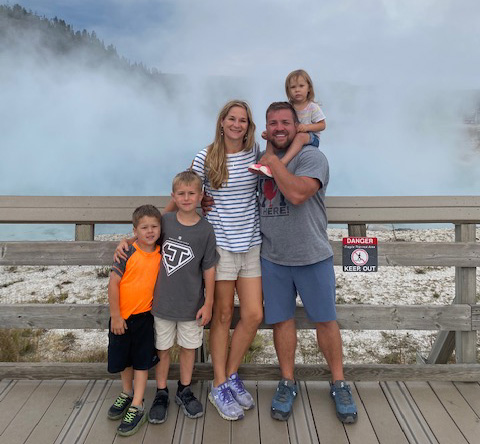
Dr. Keith was born and raised in Dallas in the middle of the city. She and her husband wanted land and the ability to raise their three children in an extended family setting. Today, Dr. Keith and her family live on an 8-acre farm with a horse, 2 donkeys, a calf, chickens, dogs and cats. They are learning to be more self-reliant on the land and enjoying a vast extended family – 15 grandkids all under the age of 12 in the area!