What is your DCISion Score?

You deserve the most validated DCIS test for Radiation Treatment Decisions. DCISionRT–Now with published Level 1b evidence.
How does the DCISionRT test benefit me?
The DCISionRT test quantifies the risk of your DCIS coming back (recurring) as well as predicting whether radiation therapy will benefit you.
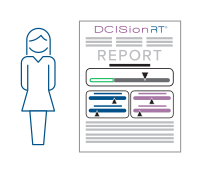
Your Biology
DCISionRT looks at the biology of your DCIS using a comprehensive assessment of the key pathways implicated in progression of breast cancer.
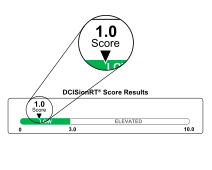
Your DCISionScore™
Intelligent risk algorithms built with AI trained with thousands of patients calculate your individualized DCISionScore. Your DCISionScore gives your personal prognosis after treatment with surgery alone or surgery and RT.
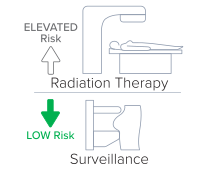
Your Decision
DCISionRT helps you and your doctor formulate a more precise treatment plan to balance treatment benefit with the risk of side effects by assessing your underlying DCIS biology.
What information does DCISionRT give me?
Based on the biology of your DCIS, the DCISionRT test provides you and your physician the information needed to make a decision whether surgery alone or surgery with radiation therapy is appropriate.
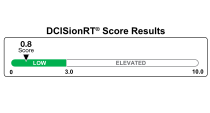

DCISionRT® Score Results
DCISionRT provides a woman’s individual DCISionScore on a scale from zero to ten, which corresponds to recurrence risks.
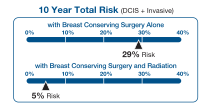
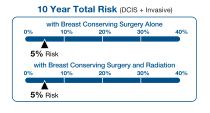
10 Year Total Risk
Total risk is the chance of having either a DCIS recurrence or developing invasive breast cancer within 10-years.

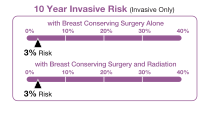
10 Year Invasive Risk
Invasive risk is the probability of developing invasive breast cancer in the breast originally diagnosed with DCIS within 10-years.
What Is the Residual Risk Subtype
The Residual Risk Subtype (RRt) is a distinct molecular subtype identified by DCISionRT®. It represents patients with elevated recurrence risk after breast-conserving surgery (BCS) that is driven by the tumor’s underlying biology—not just traditional clinical factors.
DCISionRT generates a continuous Decision Score (0–10).
Different score ranges correspond to biologically distinct subtypes and levels of recurrence risk.
- A Decision Score of 9.2 uniquely defines the Residual Risk Subtype.
- 1 out of 5 DCIS patients are Residual Risk
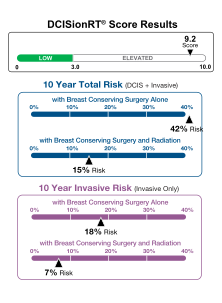
A 9.2 Decision Score indicates:
- High residual biological risk after surgery
- Substantial likelihood of recurrence over 10 years without radiation
- Radiation therapy meaningfully reduces risk
- However, risk may remain elevated even after BCS + RT
Importantly, not all elevated scores represent RRt. Many elevated-risk patients derive substantial benefit from radiation and achieve strong risk reduction. RRt specifically identifies a unique group whose tumor biology may warrant broader treatment discussion.
The Residual Risk Subtype enables clinicians to align treatment intensity with tumor behavior, personalize adjuvant therapy recommendations, and support informed, shared decision-making with patients.
FAQs
Find a Physician Ordering DCISionRT
Location Results
Contact the PreludeDx Patient Advocate team for physician name and information.

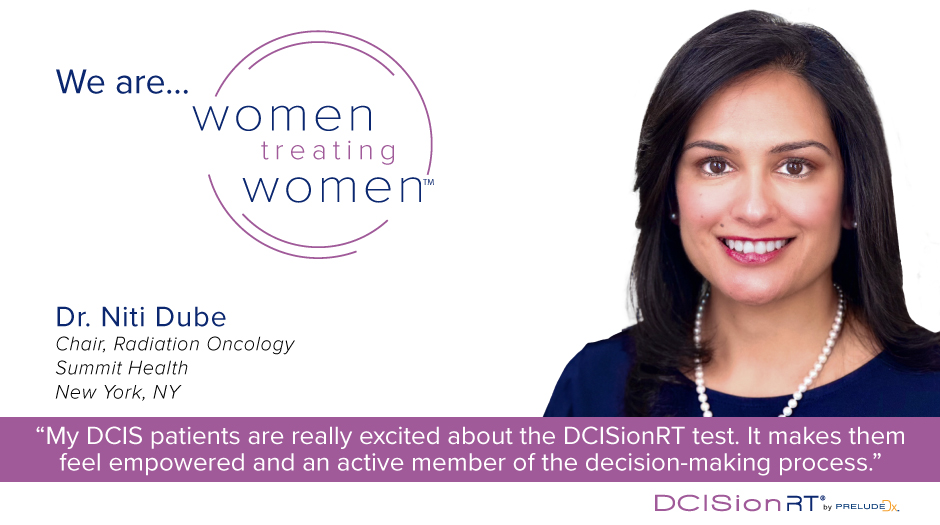












Hear what physicians are saying about DCISionRT